



Blog
. What is a Quality Policy?
21-Nov-2026 00:10 AMA Quality Policy is a formal statement of the organization's commitment to quality. It should provide a framework for establishing quality objectives and include appropriate commitments related to applicable requirements and continual improvement of the QMS. The policy should be communicated and understood within the organization and be available to relevant interested parties as appropr
Read More
What is the process approach in ISO 9001?
21-Nov-2026 00:05 AMThe process approach means managing activities as interconnected processes rather than treating each department or activity as completely separate. For example, a manufacturing organization may have: Sales → Contract Review → Purchasing → Production → Inspection → Delivery → Customer Feedback The output from one process may become the input to another process
Read More
What is risk-based thinking in ISO 9001?
02-Nov-2026 14:00 PMRisk-based thinking requires organizations to consider risks and opportunities that can affect the intended results of the QMS. Examples of quality-related risks include: Supplier delays Equipment breakdown Incorrect specifications Lack of competent personnel Software failures Inadequate inspection Incorrect customer information Material shortages Organizations should d
Read More
What is customer focus in ISO 9001?
26-Oct-2026 15:12 PMCustomer focus is one of the fundamental principles of ISO 9001. Organizations need to understand customer requirements and applicable requirements related to their products and services. They should also monitor customer perceptions and satisfaction where appropriate. Customer focus can involve: Understanding customer specifications Reviewing contracts and orders Meeting agreed de
Read More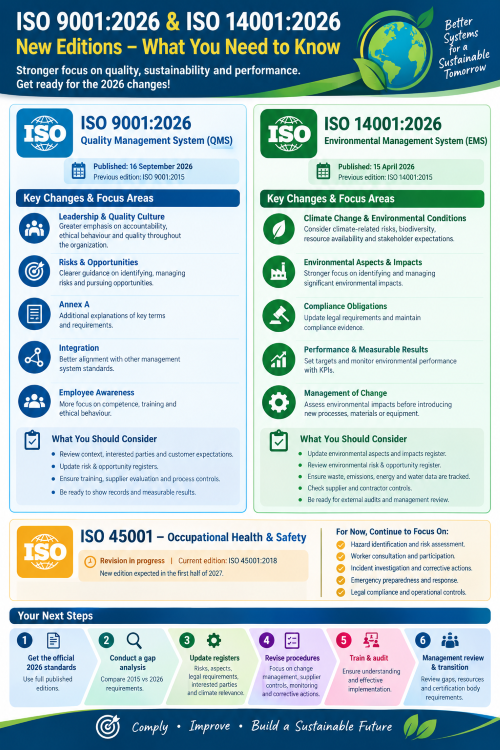
ISO 9001 and ISO 14001 have new 2026 editions
21-Oct-2026 13:37 PMThere are important updates to the ISO 9001, ISO 14001 and ISO 45001 standards as of 16 October 2026. If you're maintaining an Integrated Management System (IMS), preparing audit documents, or updating procedures, these changes are worth tracking. The biggest news is that ISO 9001 and ISO 14001 have new 2026 editions, while ISO 45001 is still under revision. ISO 9001:2026 — Quality
Read More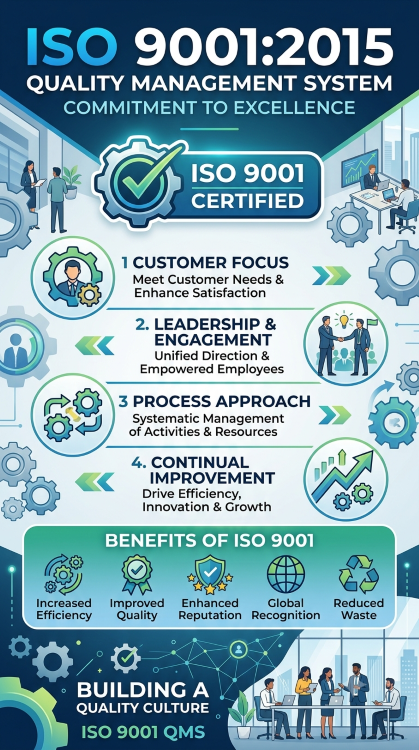
What is a ISO 9001 Quality Management System (QMS)?
13-Oct-2026 12:59 PMA Quality Management System is a structured framework used by an organization to control and improve the processes that affect the quality of its products and services. A QMS typically includes: Quality policy Quality objectives Organizational responsibilities Process controls Risk and opportunity management Customer requirement controls Supplier controls Competence and trai
Read More