



Consulting
Back to List
Hazard Analysis and Critical Control Points (HACCP)
HACCP Consultancy in Singapore – Hazard Analysis and Critical Control Points
Improve Food Safety with HACCP
Hazard Analysis and Critical Control Points (HACCP) is a systematic food safety management approach designed to identify, evaluate, and control biological, chemical, and physical hazards throughout food production and handling processes.
HACCP helps food businesses establish preventive controls to reduce food safety risks and protect consumers. It can be applied at different stages of the food supply chain, from food production and processing to storage, distribution, preparation, and service.
Implementing HACCP supports consistent food safety practices, improves process control, and helps organizations meet applicable food safety requirements.
The Seven Principles of HACCP
HACCP is based on seven principles that provide a structured approach to managing food safety hazards.
-
Conduct a Hazard Analysis: Identify potential biological, chemical, and physical hazards associated with food products and processes.
-
Determine Critical Control Points (CCPs): Identify process steps where control is essential to prevent, eliminate, or reduce food safety hazards to acceptable levels.
-
Establish Critical Limits: Define measurable limits for each critical control point.
-
Establish Monitoring Procedures: Determine how and when critical control points will be monitored.
-
Establish Corrective Actions: Define actions to take when monitoring indicates that a critical limit has not been met.
-
Establish Verification Procedures: Confirm that the HACCP system is implemented correctly and operates effectively.
-
Maintain Documentation and Records: Keep appropriate records to demonstrate that food safety controls are being followed.
Who Can Use HACCP?
HACCP principles can be applied across the food supply chain, including businesses involved in food production, processing, storage, distribution, preparation, and service.
Industries that can benefit from HACCP include:
-
Fruits and vegetables processing.
-
Meat and meat products.
-
Dairy products.
-
Fish and seafood processing.
-
Spices and condiments.
-
Cereals, nuts, and related products.
-
Fast-food operations and catering.
-
Bakeries and confectionery businesses.
-
Restaurants, hotels, and commercial kitchens.
-
Food packaging, storage, and distribution businesses.
HACCP requirements should be adapted to each organization's activities, products, processes, and food safety risks.
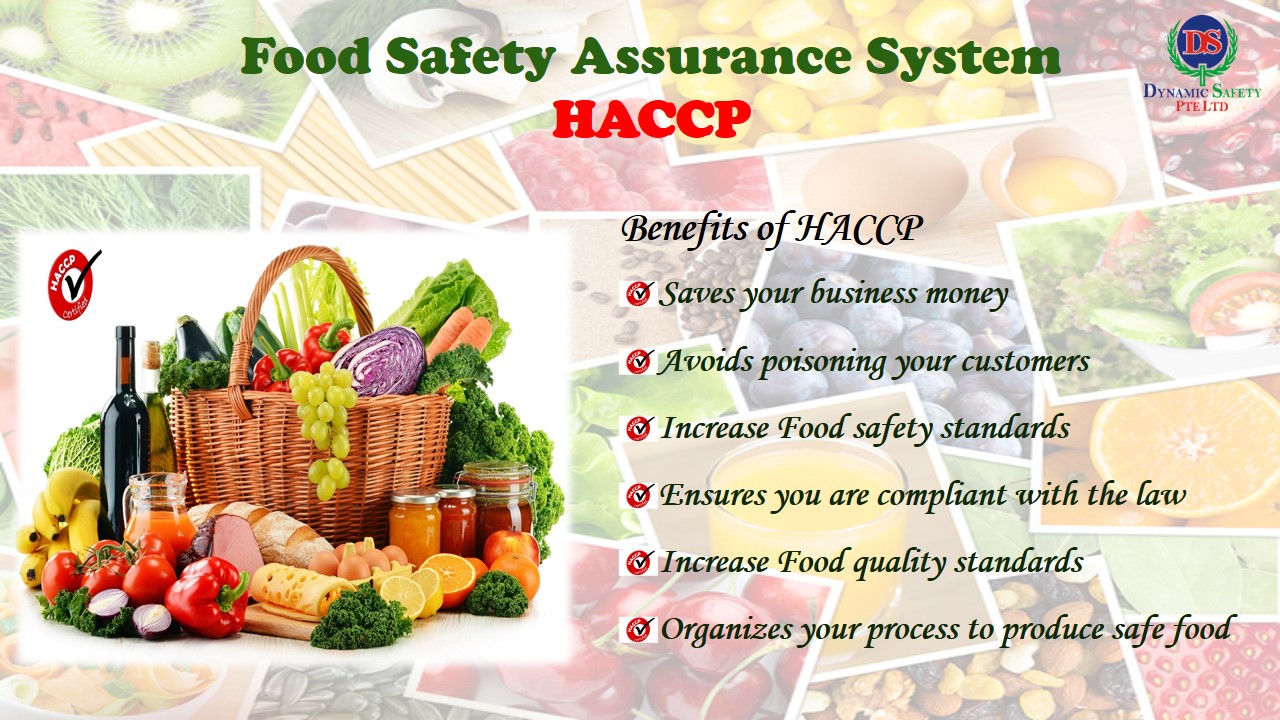
Benefits of HACCP Implementation
A properly implemented HACCP system can help food businesses:
-
Identify and control food safety hazards.
-
Reduce the likelihood of food contamination.
-
Strengthen preventive food safety practices.
-
Improve consistency in food handling and production.
-
Establish clear monitoring and corrective action procedures.
-
Maintain traceable food safety records.
-
Build customer and stakeholder confidence.
-
Support compliance with applicable food safety requirements.
-
Promote continual improvement in food safety management.
How Dynamic Safety Can Help You
Dynamic Safety provides consultancy support to help food businesses develop and implement HACCP-based food safety management practices suited to their operations.
Our approach focuses on identifying food safety risks, establishing appropriate controls, and helping your team understand and maintain the required processes.
Our consultancy support may include:
-
Gap Assessment: Review existing food safety practices and identify areas for improvement.
-
Hazard Analysis: Support the identification and evaluation of potential food safety hazards.
-
HACCP Plan Development: Assist in establishing hazard controls, critical control points, and critical limits where applicable.
-
Documentation Support: Help prepare HACCP plans, monitoring forms, and relevant food safety records.
-
Implementation Guidance: Support the implementation of monitoring, corrective action, and verification procedures.
-
Staff Awareness: Help improve employee understanding of food safety responsibilities and HACCP practices.
-
Audit Preparation: Assist your organization in preparing for applicable audits or assessments.
Our support can be tailored to your food business, operational processes, and food safety objectives.
Strengthen Your Food Safety Management with HACCP
Effective food safety management is essential for protecting consumers, maintaining product quality, and building trust in your business.
Contact Dynamic Safety to discuss how HACCP consultancy can help your organization strengthen food safety controls and improve operational practices.